REFF Services is a professional industrial and commercial painting contractor based in Baltimore, Maryland. We provide surface preparation and high-performance coatings for warehouses, manufacturing plants, parking garages, retail centers, and commercial buildings across the Baltimore metro area, Washington DC, Northern Virginia, and Southern Pennsylvania. Our team applies high-performance coatings that stop corrosion, stand up to chemicals and abrasion, and keep your operation compliant with OSHA and EPA regulations—without forcing lengthy shutdowns. As industrial commercial painter, we understand that schedules are tight, that the spaces may be reduced and that the back-to-service areas is a priority as your industrial facility or warehouse must continue producing without closing if possible.
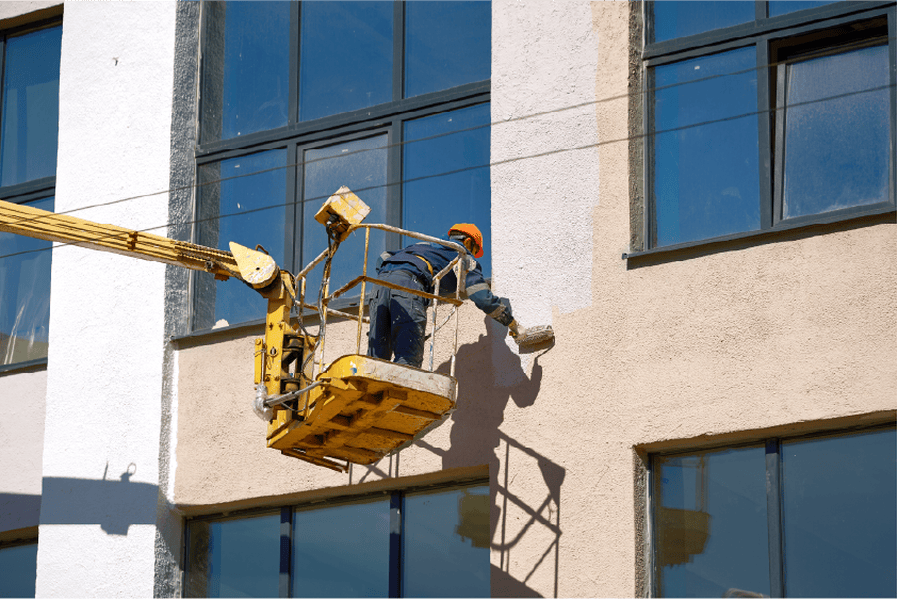
We apply durable coating systems designed for demanding industrial environments. Our work includes structural steel, columns, machinery, production areas, mezzanines, ceilings, and high-traffic surfaces. We focus on adhesion, corrosion resistance, and long-term performance. The painting process starts from the very moment of any industrial commercial painting estimate is given out. Most of the time, the painting estimates are broken down per stage, per area and their costs. All observations of the current conditions are noted on the commercial painting estimates when the surface is experiencing flakiness, chalkiness or fading. Later we made some recommendations and put together a solid industrial commercial painting scope of work. Something that we call: “the painting playbook”. To get into more detail about our industrial commercial services, every job has different tiers within the painting scope of work. Every painting job, whether it is interior painting or exterior painting, starts with surface inspection as tier 1. Then the next step is the surface preparation tier 2. From here we determine how the surface should be prepared before painting. Depending on the painting specs or our own recommendation, we could simply power wash the substrates, scrape loose paint, grind flaky paint, full sandblasting or spot sandblasting. The surface preparation is the most critical tier in the industrial commercial painting process as it ensures that the industrial coating will “stick to the surface”. Tier 3 is as essential as any of the other tiers as this is where we start coating application with the primer. The other two tiers are about adding more industrial coating on top of each other.
Commercial Building Painting We paint offices, retail spaces, medical facilities, schools, and multi-tenant buildings. Services include wall and ceiling painting, doors and trim, stairwells, lobbies, corridors, and back-of-house areas with minimal disruption to ongoing operations.
Parking Garages & Structures We provide complete painting for parking garages, including ceilings, beams, bollards, curbs, safety markings, and protective coatings for exposed surfaces.
Surface Preparation & Safety Proper surface prep is critical. Depending on the substrate and existing conditions, we use methods such as power washing, mechanical abrading, and blasting to create a sound surface before applying coatings. All work is performed with attention to safety, ventilation, and containment.
When it comes to industrial and commercial painting, the success of the entire project starts with surface preparation. No matter how advanced or expensive the coating system is, it will only perform as intended if the surface is properly prepared. Correct preparation ensures maximum adhesion, longer coating life, and fewer costly repairs down the road.
Surface preparation is not a one-size-fits-all process. Depending on the condition of the substrate, exposure environment, and performance goals, different preparation standards may be required, including:
As an experienced industrial and commercial painting contractor, we don’t just apply paint—we help you make informed decisions that protect your investment. We take the time to explain each surface preparation option, clearly outlining the cost, performance expectations, and long-term value of each approach.
Most industrial coating manufacturers recommend full coating removal when there is existing paint failure or corrosion to ensure maximum coating life. While some industrial commercial contractors may cut corners by only spot-prepping damaged areas, this often leads to premature failure and higher maintenance costs. We focus on doing the job right the first time—balancing budget considerations with proven preparation methods that deliver durable, long- lasting results.
Our goal is simple: extend the life of your assets, reduce future maintenance, and deliver a finish that performs—not just looks good on day one.
Before applying any industrial coating, we must analyze what is on the surface, determine what kind of surface preparation is needed and how bad the rust in. Not all rust is the same. Identifying the type and severity of corrosion is critical to selecting the right surface preparation and selecting the right industrial coating needed. Treating rust correctly from the start helps prevent premature coating failure and protects your asset long-term.
Common types of rust include:
This is the earliest and least severe form of corrosion. It appears as light discoloration or shallow oxidation on the metal surface. While it may look minor, surface rust must still be properly removed to ensure proper industrial paint adhesion.
Scale rust occurs when mill scale or old coatings begin to break down, allowing moisture to penetrate underneath. This type of rust often leads to peeling paint and requires aggressive surface preparation to fully remove compromised material.
Pitting rust creates small cavities or holes in the metal surface. It is more serious than surface rust and can weaken structural integrity over time. Proper blasting or power-tool cleaning is required to stop corrosion from continuing beneath the coating.
This type of rust forms in tight areas such as joints, seams, bolt connections, and overlapping steel. These hidden areas trap moisture and contaminants, making corrosion difficult to detect and more likely to spread if not addressed correctly.
Galvanic corrosion occurs when two dissimilar metals come into contact in the presence of moisture. One metal corrodes faster than the other, leading to accelerated damage if not properly isolated or protected.
This corrosion develops beneath existing paint or coatings and is often not visible until the coating begins to blister or fail. If not fully removed, under film corrosion will continue to spread and cause premature coating failure.
This is the most severe form of rust and can compromise the strength and safety of steel components. Structural corrosion requires immediate attention, full coating removal, and often repair before repainting.
Each type of rust requires a specific level of surface preparation—from power- tool cleaning to full abrasive blasting. Simply painting over rust may temporarily improve appearance, but it will not stop corrosion and often lead to higher repair costs in the future.
As an experienced industrial and commercial painting contractor, we evaluate the condition of your steel, identify the type of corrosion present, and recommend the most effective and cost-efficient solution to protect your investment and extend the life of your assets.
A critical part of any commercial or industrial painting project is selecting the right coating system. At REFF Services, we work closely with leading paint manufacturers to ensure each project receives the most effective coating solution based on surface conditions, budget, and required return-to-service time.
There is a wide range of industrial coating systems available, and no single system is right for every project. The key difference often comes down to single- component (one-part) versus multi-component (two- or three-part) coating systems
Single-component industrial coating systems are ready to use straight from the can. Whether used as a primer, intermediate coat, or topcoat, these systems are easy to apply, require minimal downtime, and are a cost-effective option when appearance and speed are the primary goals. Single-component coatings allow for quick project completion and fast return to service, typically at a fraction of the cost of multi-component systems. However, they are primarily cosmetics and offer limited long-term corrosion protection.
Two-part and three-part industrial coating systems provide significantly higher performance. These systems are designed for demanding environments where durability, chemical resistance, and long-term protection are critical. While they come at a higher cost, they deliver superior results and longer service life. Multi- component industrial coating systems require experienced applicators, precise mixing, strict adherence to pot life, and longer cure times between coats—making proper execution essential to their success.
As an experienced industrial and commercial painting contractor, our role is to guide you through these options, clearly explaining the advantages, limitations, costs, and performance expectations of each coating system. This ensures you can make an informed decision that balances upfront investment with long-term protection and value.
At REFF Services, we don’t just apply coatings—we help you choose the system that best protects your facility and your investment.
Serving manufacturing plants, food-processing lines, logistics hubs, healthcare campuses, and more across Anne Arundel, Baltimore City & County, Howard county, Montgomery county, Prince George's, county plus D.C. and Northern Virginia.

Epoxy and poly-urethane systems engineered for steel, concrete, and galvanized substrates.

Formulas tested against acids, solvents, salt-spray, and 3,000 hrs of Q-Sun.

We work with multiple paint manufacturers to include Sherwin Williams and Carboline depending on the application. Our vendors carry a vast selection of colors that could be customized and others are straight safety color

EMR below industry average, daily toolbox talks and full PPE compliance.
Sandblasting, power washing, grinding, or soda blasting to achieve the ideal anchor profile.
High-adhesion epoxy primers that lock onto steel, concrete, and masonry.
UV-stable polyurethane or acrylic systems for a durable, glossy finish.
QA checks, DFT readings, and client sign-off.

Contact REFF Services to schedule a site visit or request a proposal for your next industrial or commercial painting project.